You know, I’ve been running around construction sites all year, getting my hands dirty, talking to engineers, and honestly, the biggest trend I've seen lately is everyone wanting… well, everything to be lighter. Lighter materials, lighter designs, lighter everything. Makes sense, right? Less hauling, easier installation. But it's a slippery slope. People forget that lighter doesn’t always mean better. You start cutting corners on density or thickness, and suddenly you’re dealing with a whole new set of problems.
I’ve seen it happen too many times. Designs look great on paper, all sleek and minimalist, then they hit the job site and just… fall apart under real-world stress. It’s frustrating.
We mainly work with high-density polyethylene (HDPE) pipes, and polypropylene (PP) fittings. Honestly, the smell of heated PP in the morning? That's the smell of progress. Feels a bit like plastic, obviously, but good PP has a certain rigidity to it. And HDPE, well, it’s surprisingly flexible but incredibly tough. I always tell the guys, if you can easily dent it with your fingernail, send it back. It’s gotta have that ‘give’ without actually giving way.
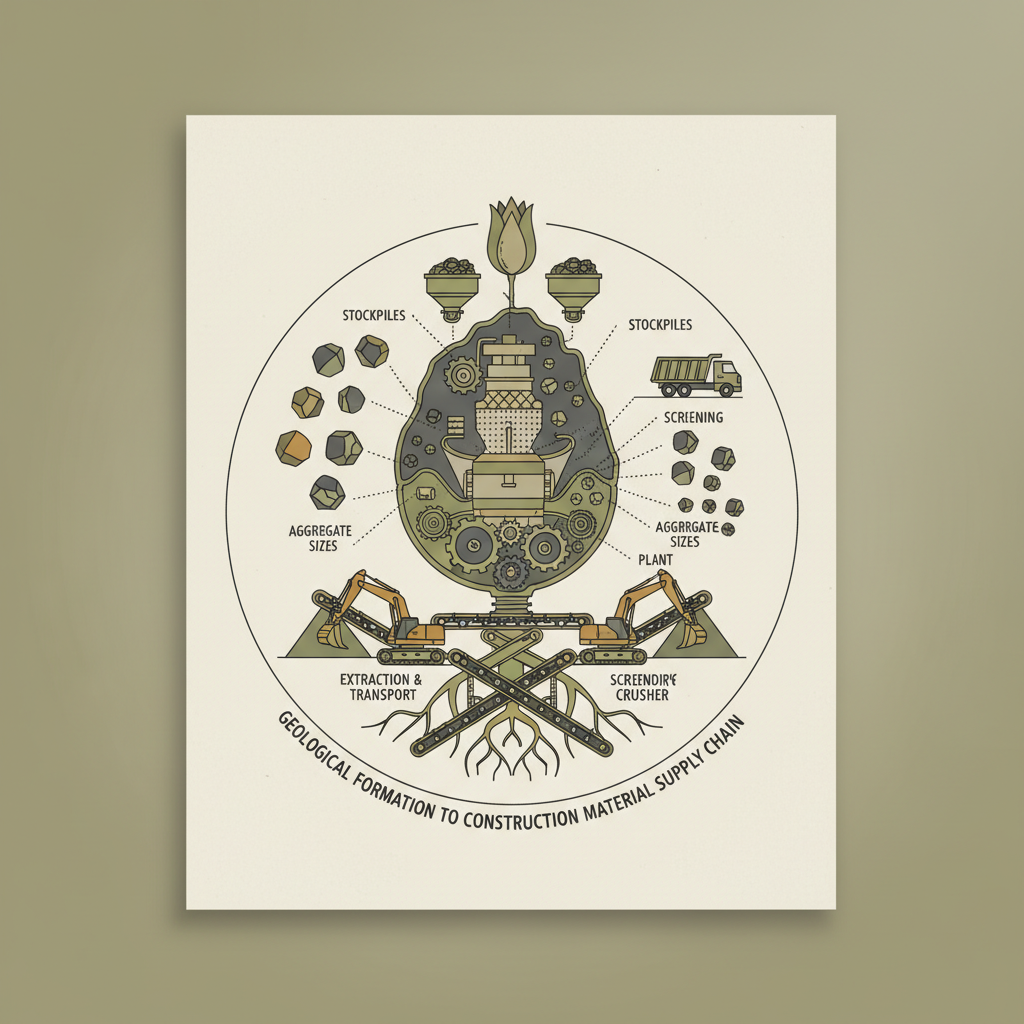
The Current Landscape of crushed rock suppliers
To be honest, the market is flooded with suppliers. Everyone and their brother is offering HDPE and PP pipes. It’s getting harder and harder to find quality. What I’ve noticed is that a lot of them are focused on price, price, price. And when you focus solely on price, something’s gotta give. Usually, it’s the quality control. Have you noticed that? It’s a race to the bottom, really. We spend a lot of time vetting suppliers, not just looking at certifications, but actually visiting their factories, talking to their workers, and seeing how things are made.
The demand is driven by infrastructure projects, obviously, but also by the growing focus on sustainable drainage systems. Everyone wants to manage stormwater better, reduce runoff, and protect the environment. Which is good, don’t get me wrong, but it puts a strain on the supply chain.
Design Pitfalls and Material Selection
I encountered this at a factory in Ningbo last time – they were designing a drainage system for a new shopping mall, and the engineers wanted to use a thinner-walled HDPE pipe to save money. I told them, “Look, you're building a shopping mall! People are going to be walking and driving over this stuff. You need something that can handle the load.” They brushed me off, said their calculations were solid. Strangely, I got a call a few months later – the system had failed during a heavy rainstorm. Cost them a fortune in repairs. That's when they started listening to me.
The biggest pitfall is underestimating the soil conditions. If you’re installing pipes in unstable soil, you need to use a heavier-duty pipe with more reinforcement. And don’t forget about the connections! A weak fitting can compromise the entire system.
People also often overlook the importance of UV resistance. If the pipe is exposed to sunlight, it will degrade over time. You need to use a UV-stabilized material, or bury the pipe deep enough to protect it.
Material Properties and On-Site Handling
HDPE, as I said, is great for flexibility. You can bend it, shape it, and it won’t crack. But it’s also susceptible to creep, which means it can slowly deform under constant pressure. PP is more rigid, which is good for straight runs, but it’s also more brittle, especially in cold weather. That's why we always instruct the guys to store the PP fittings indoors during the winter.
On-site handling is crucial. You can’t just throw these pipes around. They need to be stored properly, protected from damage, and installed correctly. I’ve seen guys use heavy machinery to try to force pipes together, and it always ends badly. Always use the proper tools and follow the manufacturer’s instructions. Always.
Oh, and a little tip: if you’re welding HDPE pipes, make sure the welding surface is clean and dry. Even a tiny bit of moisture can weaken the weld. I had a guy tell me he cleaned it with a wet rag… Later… Forget it, I won’t mention it.
Real-World Testing and Application Scenarios
Lab tests are fine, but they don’t tell the whole story. We do our own testing on-site, under real-world conditions. We’ll bury a section of pipe and then drive a truck over it. We’ll pressure test the connections to make sure they can withstand the maximum operating pressure. We’ll even soak it in different chemicals to see how it holds up.
I've seen these pipes used in everything from large-scale stormwater drainage projects to small-scale residential irrigation systems. They’re even being used in aquaculture – creating ponds for fish farming. They’re versatile, that’s for sure.
Comparative Performance of crushed rock suppliers Methods
Advantages, Disadvantages, and Customization Options
The biggest advantage is corrosion resistance. These pipes won't rust or corrode, even in harsh environments. They’re also lightweight and easy to install. But, as I said before, they're not indestructible. They can be damaged by sharp objects, and they can creep under pressure.
Customization is possible. You can get pipes in different sizes, colors, and with different fittings. Last month, that small boss in Shenzhen who makes smart home devices insisted on changing the interface to . He said it was "more modern." Honestly, it added a ton of cost and complexity, and it didn’t really improve the performance. But hey, it was his money.
User Behavior and Unexpected Applications
What surprises me is how often people try to use these pipes for things they weren’t designed for. I’ve seen guys use HDPE pipe as conduit for electrical wiring. Don’t do that! It’s a fire hazard.
I’ve also seen them used as makeshift fences, and even as supports for temporary structures. People are resourceful, I’ll give them that. But you have to be careful. Just because something can be done doesn’t mean it should be done.
Another thing – people underestimate the importance of proper backfill. If you don't compact the soil around the pipe properly, it can settle and crack the connections.
A Case Study and Practical Considerations
We did a project in rural Guangxi province last year, installing a drainage system for a new agricultural complex. The soil was really unstable, and the weather was unpredictable. We ended up using a heavier-gauge HDPE pipe with extra reinforcement, and we added a layer of geotextile fabric to stabilize the soil. It cost more upfront, but it saved them a lot of headaches down the road.
The key takeaway is to understand the specific requirements of each project. There's no one-size-fits-all solution. You need to consider the soil conditions, the climate, the load, and the intended use.
And always, always, listen to the guys on the ground. They're the ones who are actually doing the work, and they know what works and what doesn’t.
Summary of Key Considerations for crushed rock suppliers Selection
| Material Type |
Strength & Durability |
Cost Factor |
Installation Complexity |
| HDPE |
High Flexibility, Moderate Impact Resistance |
Medium (typically $2-$4/foot) |
Relatively Easy - Welding or Socket Fusion |
| PP |
High Rigidity, Lower Impact Resistance |
Low (typically $1.50-$3/foot) |
Moderate - Socket Fusion or Butt Fusion |
| PVC |
Good Strength, Brittle |
Very Low (typically $1-$2/foot) |
Easy - Solvent Cement |
| Reinforced Concrete |
Very High Strength & Durability |
High (typically $5-$10/foot) |
Complex - Requires Formwork & Curing |
| Fiberglass |
High Strength, Lightweight |
Medium-High (typically $4-$8/foot) |
Moderate - Requires Specialized Tools |
| Clay/Terracotta |
Moderate Strength, Porous |
Low-Medium (typically $1.50-$4/foot) |
Easy - Slip Joint or Mortar |
FAQS
Honestly? Underestimating the soil conditions. I see it all the time. They go with a cheaper, thinner-walled pipe, and then it collapses under the weight of the soil. Always get a geotechnical survey done before you start digging. It’ll save you a lot of money – and headaches – in the long run.
It's crucial if the pipe is exposed to sunlight. UV radiation will degrade the plastic over time, making it brittle and prone to cracking. You either need to use a UV-stabilized material, or bury the pipe deep enough to protect it from the sun. It’s a simple thing, but people often overlook it.
HDPE is typically welded using butt fusion or electrofusion, which creates a very strong, reliable joint. PP is usually socket fused, which is a bit easier, but the joints aren’t quite as strong. You need trained technicians for both, don’t try this at home!
Layered compaction is key. Don't just dump a bunch of dirt on top and hope for the best. Compact the soil in layers, about 6-8 inches at a time, using a plate compactor. And make sure the soil is at the right moisture content. Too dry, and it won’t compact properly. Too wet, and it’ll be mushy.
Look for cracks, leaks, or bulging. Also, check for loose connections or signs of soil settlement around the joint. If you see any of these things, it’s time to investigate. Ignoring it will only make the problem worse.
Yes, but you need to use pipes that are specifically certified for potable water use. They’ll have different requirements for material composition and manufacturing processes to ensure they don't leach any harmful chemicals into the water. Don’t just grab any old pipe and start drinking from it!
Conclusion
Ultimately, choosing the right crushed rock suppliers is about finding the right balance between cost, performance, and reliability. There's no magic bullet, and every project is different. You need to understand the specific requirements of the job, consider the environmental factors, and choose a material that’s up to the task. It’s not always the cheapest option, but it’s almost always the smartest.
And remember, the worker will know the moment he tightens the screw whether this thing works or not. They’re the ones who have to live with the consequences of our decisions. So, listen to them, trust their judgment, and always strive to provide them with the best tools and materials possible. That's all there is to it, really.